
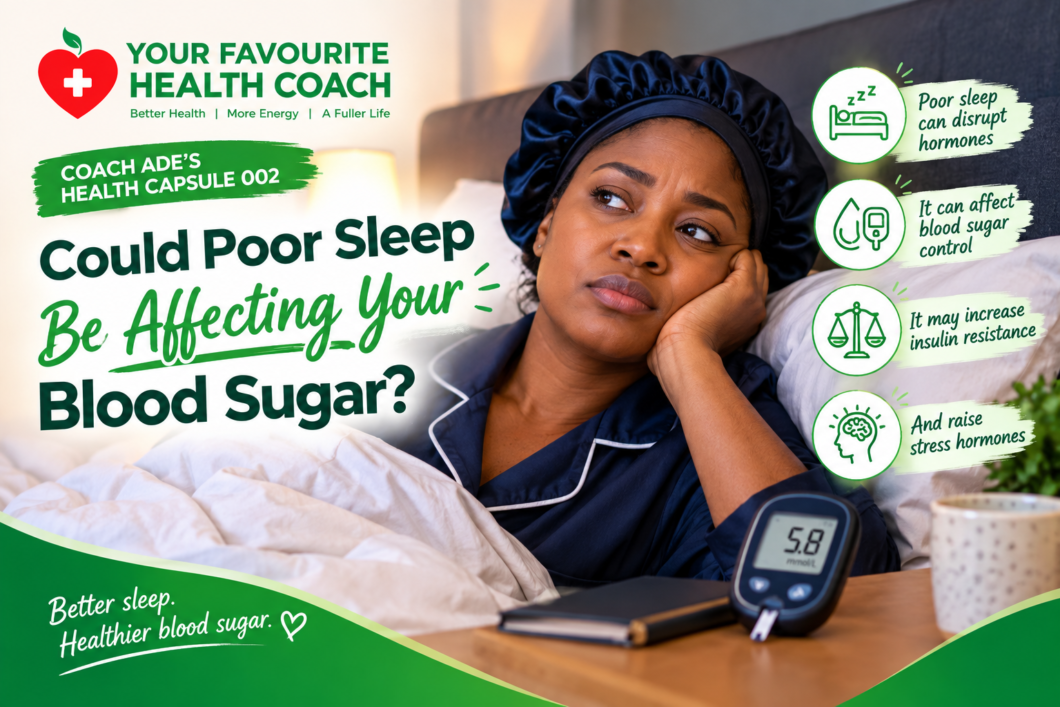
You may think that sleep is simply about feeling rested the next morning. But your sleep also influences how your body handles energy.
When you consistently sleep poorly or don’t get enough sleep, your body can become less responsive to insulin. This means glucose may not move into your cells as efficiently, leaving more glucose circulating in the bloodstream.
Poor sleep can also affect hormones involved in hunger and appetite, which may increase cravings, particularly for quick sources of energy such as sugary or highly refined foods.
Stress hormones is another piece of the puzzle. When your body doesn’t get adequate restorative sleep, cortisol and other stress signals can be affected. These signals influence glucose production and your body’s response to insulin.
So the connection can become a cycle:
Poor sleep → altered stress and appetite signals → poorer glucose regulation → more cravings and energy fluctuations → potentially poorer sleep.
This doesn’t mean one bad night’s sleep will give you insulin resistance. The concern is repeated, chronic sleep disruption.
If you’re working on your blood sugar, don’t look only at your food. Look at your sleep, stress, movement and overall metabolic environment too. Your body doesn’t regulate blood sugar in isolation. Sleep is part of metabolic health.
Coach Ade’s Health Capsule: Sometimes, improving your metabolism begins with improving your night.